From the Blog · College Grove, TN
Dryer Not Heating? The Usual Causes
A dryer with no heat has a short suspect list. Electric models burn out an element or blow a thermal fuse; gas models most often have a weak igniter that glows but never opens the gas valve. The trap is replacing the part without asking why it failed, because a clogged vent kills elements and fuses on a schedule.

Electric dryers: heat is a circuit, and it breaks in order
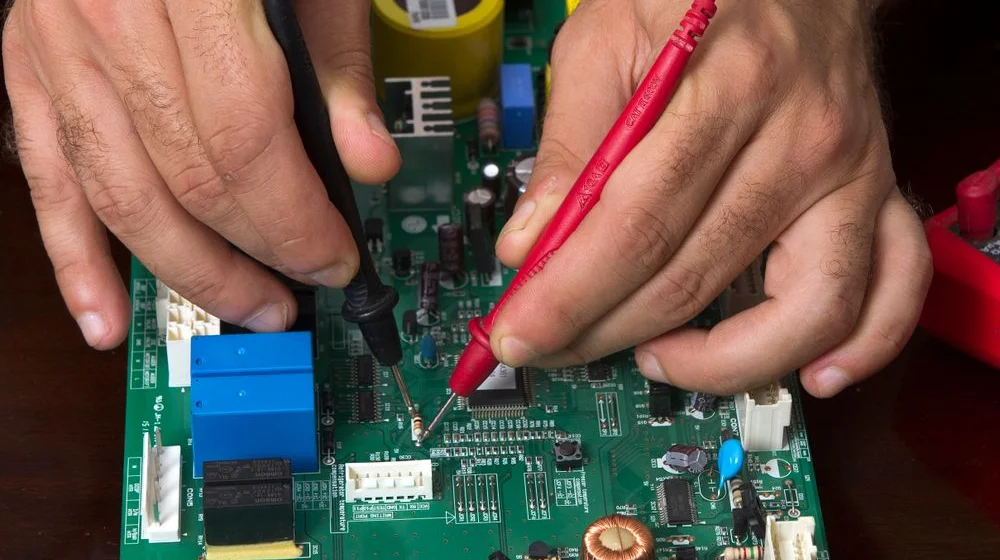
Power flows through a timer or board, thermostats, a thermal fuse and the element. Any open point kills the heat while the drum keeps turning, which is why a no-heat dryer still sounds normal. A meter finds the open point in minutes. The thermal fuse deserves respect: it blows when the dryer overheats, and overheating usually means restricted vent airflow. Replace the fuse without fixing the vent and you will meet the new fuse's replacement soon. Our dryer repair page describes the full test sequence.
One more electric quirk: a dryer on a partly tripped breaker can tumble on 120 volts and never heat, because the element needs the full 240. Check the breaker before anything else.

Gas dryers: the glow that lies
A gas dryer igniter should glow bright and draw enough current to open the safety valve. Aging igniters glow orange, look busy, and draw too little, so the valve never opens and no flame appears. It is the single most common gas dryer fault we run in College Grove, ahead of the valve coils that fail in sets and cut heat mid-cycle as they warm.
Gas work carries rules. Beyond watching through a peep hole if your model has one, leave gas dryer heat diagnosis to a technician. Our gas appliance repair visits end with leak and flame checks for exactly this reason.
The vent is part of the dryer, like it or not
Long vent runs in Falls Grove, Reeds Vale and McDaniel Farms homes clog steadily, and roof-exit vents clog fastest. A dryer that heats but takes two cycles is telling you the pathway is closing. Cleaning the vent restores the dryer you already own and removes a genuine fire risk, which is why we measure airflow on slow-dry calls before quoting parts.